Best Seller


Service Body Flatbed Options for Real Work
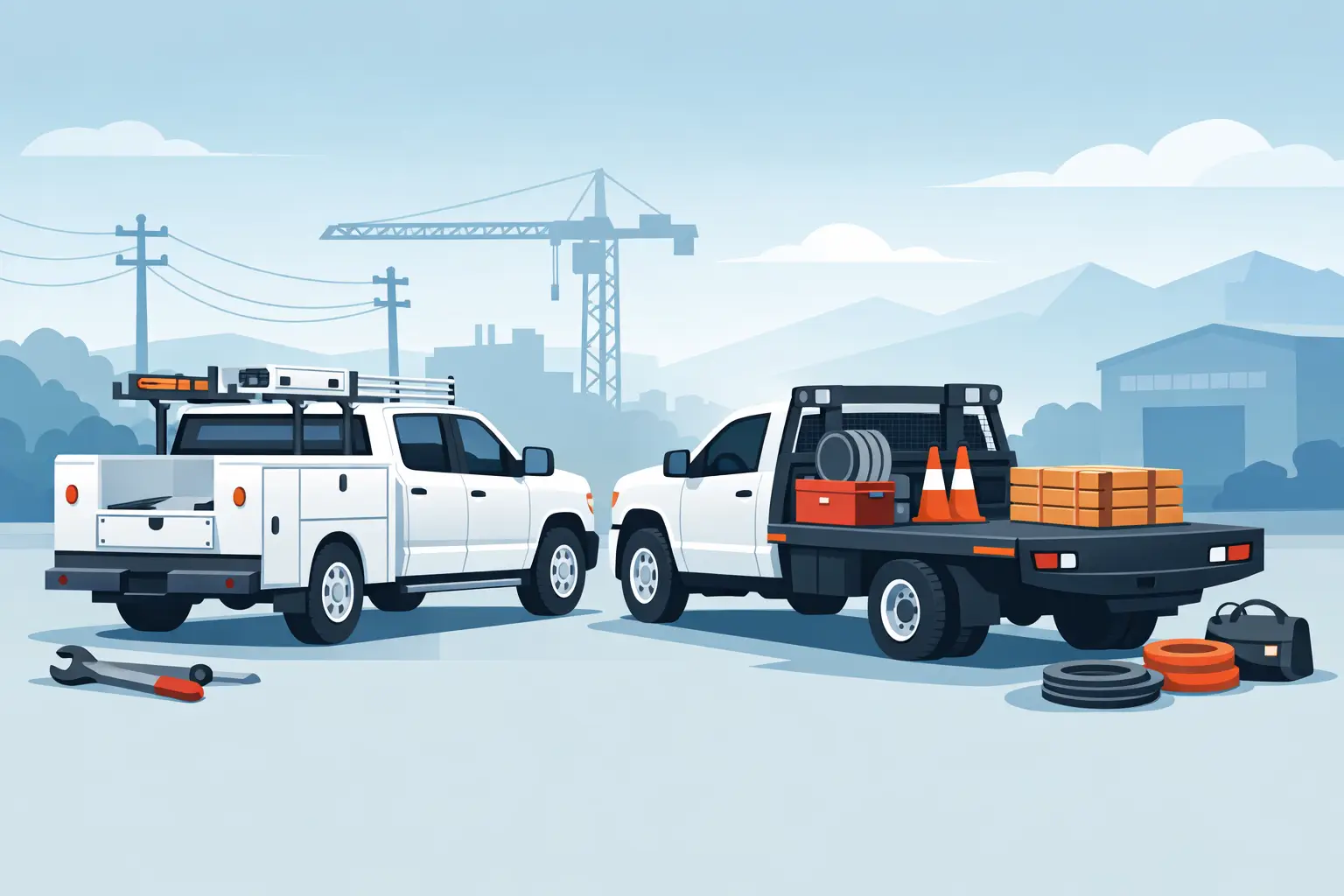
A work truck that forces you to climb, reach, unload, and reorganize all day costs more than time. The right service body flatbed options put tools where you can reach them, leave room for material, and give your truck a better shot at handling the work you actually do. The best setup is not always the biggest bed or the one with the most compartments. It is the one built around your crew, cargo, equipment, and daily jobsite routine.
Start With the Work, Not the Bed
Before choosing a body style, look at what rides in the truck from Monday through Friday. A contractor hauling lumber, ladders, and a skid steer attachment needs a different layout than a mobile mechanic carrying compressors, parts bins, welders, and hand tools. A farm truck may need open deck space for pallets and equipment, while a utility crew may prioritize lockable side storage and quick roadside access.
Think through the items that are hardest to carry, secure, or access. Long material, fuel cans, generators, toolboxes, pipe, chains, and towing gear all take up space differently. If the load changes constantly, open deck area matters. If expensive tools stay on the truck, secure storage should move higher on the list.
It also pays to consider who uses the truck. A one-person operation can work around a specialized layout. A shared fleet truck needs a more straightforward setup that lets different operators find equipment quickly and return it to the right place.
Service Body Flatbed Options That Change the Job
A flatbed does one thing exceptionally well: it gives you usable cargo space from side to side. That open platform makes loading with a forklift easier, provides room for oversized material, and lets you carry loads that would not fit between traditional pickup bed walls. From there, the storage configuration determines how much organization you gain without giving up deck space.
Flatbed With Underbody Toolboxes
A steel flatbed with underbody boxes is a practical choice for operators who need a clear deck but still want protected storage. The boxes mount below the bed rails, keeping chains, straps, hand tools, and smaller equipment out of the weather without blocking the main platform.
This setup works well for equipment haulers, landscaping crews, and general contractors. The trade-off is that underbody boxes have limited height. They are excellent for low-profile gear but may not hold tall cases, large power tools, or service equipment that needs to stay upright.
Flatbed With Side-Mounted Storage
Side-mounted boxes bring tools closer to waist level and make daily access faster. They can be placed ahead of the rear wheels, behind the cab, or along selected portions of the bed. This can be a smart middle ground when you need more storage than underbody boxes provide but still need a usable work deck.
The key is protecting usable width. Boxes that extend too far into the deck can limit what you can load between them. If you regularly haul pallets, sheet goods, or wide equipment, measure your most common loads before committing to a box layout.
Service Body and Flatbed Hybrids
For operators who need both organization and hauling space, a service body flatbed hybrid can be the strongest all-around option. These builds pair full-height compartments with a rear deck or open center section. Mobile repair crews, welders, utility contractors, and field-service operators often benefit from this approach because it creates dedicated storage without giving up every inch of load area.
The compromise is weight and complexity. More compartments, doors, shelves, and accessories add pounds before tools ever go in the truck. A hybrid body needs to be planned around the truck’s available payload, rear axle rating, and intended towing load.
Full Service Bodies
A traditional full service body offers the most built-in organization. Tall side compartments can hold drawers, bins, hose reels, chargers, and equipment that needs protection from theft and weather. If your truck functions as a rolling workshop, the convenience can be hard to beat.
But a full service body is not the best answer for every operation. It reduces open cargo space and can make awkward, oversized loads harder to carry. For crews that move building materials or machinery as often as they use tools, a flatbed-based design usually delivers more flexibility.
Steel Construction Matters on a Work Truck
Body material affects durability, payload, maintenance, and long-term value. Steel flatbeds remain a strong choice for demanding work because they take abuse, support heavy use, and can be repaired or modified when the job changes. A well-built steel bed gives you solid anchor points, durable rails, and a platform that is ready for regular loading.
The trade-off is weight. Steel adds more weight than aluminum, which can reduce the payload available for tools and cargo. That does not automatically make steel the wrong choice. It means the build has to match the chassis. A properly selected truck and body combination can carry the equipment you need without running at its limit every day.
Finish quality matters, too. Powder coating, primer, and careful prep help protect the body from road salt, mud, moisture, and chipped paint. For truck owners across Virginia, North Carolina, West Virginia, and Maryland, corrosion protection is worth considering from the start, especially on trucks that work through winter or travel gravel roads regularly.
Plan the Deck Around Loading and Securement
The deck is more than a flat surface. It needs to make loading safe, keep cargo secure, and hold up to the equipment you use. Stake pockets, rub rails, tie-down points, headboards, and removable side rails all affect how the bed works in the field.
A headache rack or cab guard is especially useful when hauling long material, pipe, ladders, or equipment that could shift forward. It can also provide a place to mount lights, conduit carriers, or ladder restraints. If visibility matters on tight jobsites, choose a design that protects the cab without creating a large blind spot.
For equipment loading, consider ramp storage and rear access early in the process. Ramps need a secure place to ride when not in use, and the rear of the bed should leave enough clearance for them to deploy safely. If you tow regularly, make sure the hitch, receiver area, trailer plug, and safety-chain access remain easy to use after the body is installed.
Do Not Guess at Payload, Wheelbase, or Fit
A body that fits the frame is not necessarily a body that fits the truck’s working capacity. Start with the truck’s GVWR, axle ratings, tire capacity, and available payload. Then account for the weight of the bed, boxes, tools, fuel, accessories, passengers, and tongue weight from a trailer.
Wheelbase and cab configuration also affect bed length and layout. A long-wheelbase chassis may allow more deck space or larger compartments, while a shorter truck may need a tighter design to keep weight balanced. Fuel fill access, frame clearance, spare tire location, and lighting all need to be addressed before fabrication begins.
This is where a custom build earns its value. HCR Custom Fabrication can help match the bed layout to the truck, instead of forcing your work into a generic configuration that almost fits.
Choose Accessories That Earn Their Space
Accessories should make the truck more useful, not simply make it look more equipped. A vice mount can be valuable for a field-service truck, but it may be dead weight on a material hauler. Ladder racks help crews that carry ladders daily, while removable racks may be better for a truck that alternates between service work and larger loads.
Lighting is another area where practical choices matter. Work lights, marker lights, backup lights, and trailer connections should be positioned for real use and protected from damage. Lockable compartments, drawer systems, and shelving can reduce wasted time, but only if they are sized around the tools you carry.
Before ordering, make a simple inventory of what stays on the truck, what comes and goes, and what needs to be secured. That list will tell you more about the right body layout than a catalog photo ever will.