Best Seller


Best RV Brake Controller for Safe Towing
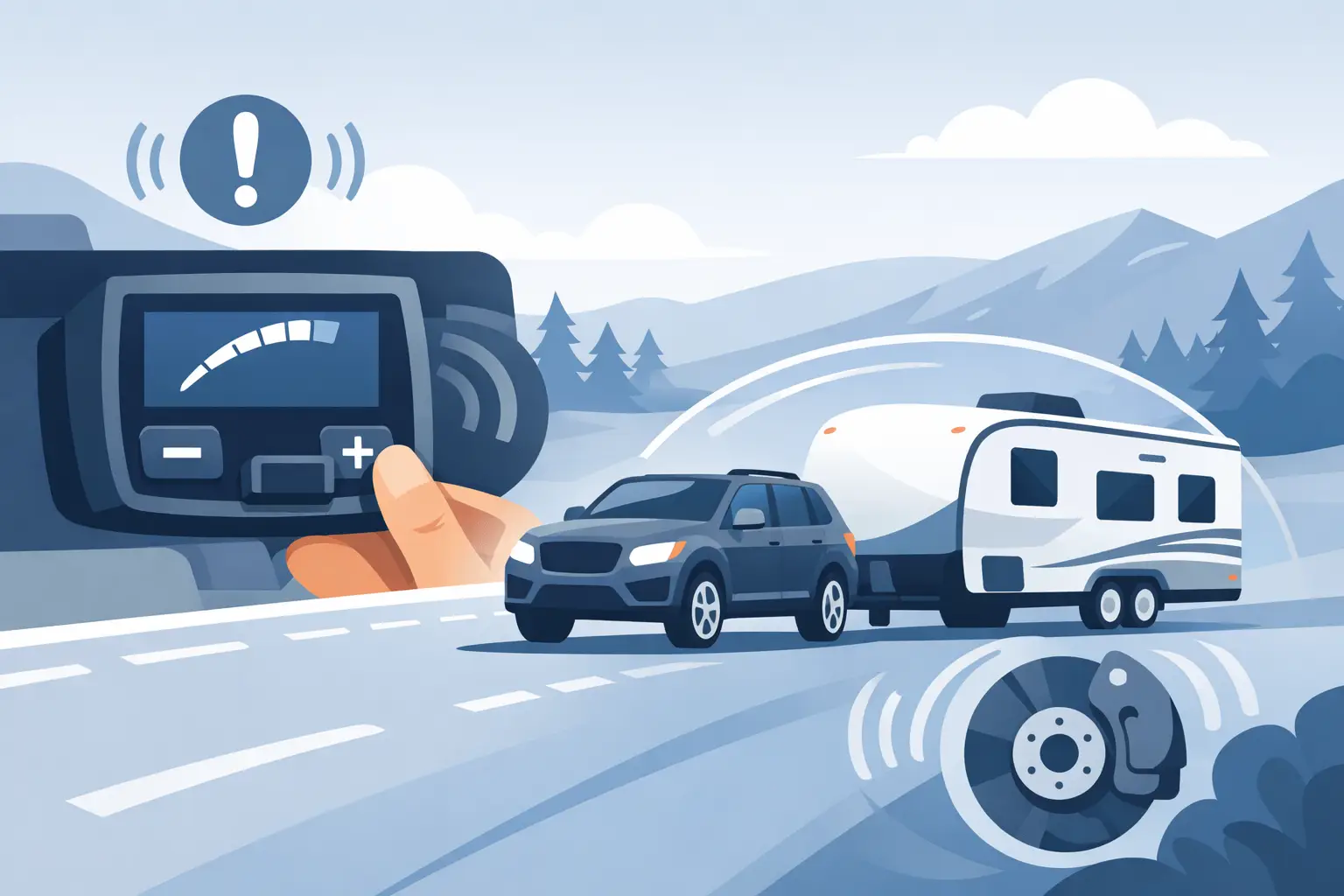
Hooking up a camper and hoping the factory tow package is enough is how a lot of brake controller problems start. The best rv brake controller is the one that matches your trailer weight, your tow vehicle, and the way you actually travel – not just the one with the most buttons or the highest price tag.
If you tow in mountain grades, crowded traffic, wet weather, or mixed-load conditions, brake control is not a small detail. It affects stopping distance, trailer stability, brake wear, and driver confidence. Get it right, and your rig feels planted. Get it wrong, and every stop feels like the trailer is making its own decisions.
What makes the best RV brake controller?
A good brake controller does one job well – it sends the right amount of braking force to the trailer at the right time. That sounds simple, but the difference between controller types is what separates smooth, controlled stops from jerky braking or trailer push.
For most RV owners, the best choice is a proportional controller. This type senses how hard the tow vehicle is braking and applies trailer brakes in proportion. The result is smoother stopping, less grabbing, and better control at highway speed. If you tow a travel trailer, fifth wheel, or a heavier camper on a regular basis, proportional control usually makes the most sense.
Time-delay controllers still have a place, especially for lighter or occasional towing setups. They ramp up braking based on a preset timing curve rather than matching the tow vehicle’s braking force in real time. They are often less expensive and more basic to set up, but they can feel less refined in stop-and-go driving and downhill braking.
That is the first real trade-off. If budget is the main concern and your trailer is modest in size, a time-delay unit may work fine. If towing feel, emergency response, and long-distance comfort matter more, proportional is usually worth the extra money.
Proportional vs. time-delay brake controllers
Choosing the best rv brake controller starts with understanding how these two designs behave on the road.
Proportional controllers
Proportional units use internal sensors to measure deceleration. When you brake lightly, the trailer brakes respond lightly. When you brake hard, they respond harder. That matters when traffic stacks up suddenly or when you’re managing downhill grades with a loaded trailer behind you.
These controllers tend to be the better fit for frequent RV travelers, heavier trailers, and drivers who want smoother braking at highway speed. They usually cost more, and some models are a little more sensitive to mounting angle or setup. Still, for most serious towing applications, this is where you want to start.
Time-delay controllers
Time-delay units apply braking force after a short delay, then increase output according to your settings. They are simpler and often easier on the wallet. For occasional towing or lighter campers, they can do the job.
The downside is feel. Because they are not reacting to actual deceleration the same way a proportional controller does, stops can feel too soft at first or too aggressive once the output ramps up. In steady local driving that may be acceptable. In changing road conditions, it can be a compromise.
Features that actually matter
A lot of controller listings make every feature sound critical. In real use, only a handful make a real difference.
A clear display matters because you need to see output settings, connection status, and error messages without guessing. Manual override matters because it lets you apply trailer braking independently if the trailer starts to sway. Easy gain adjustment matters because road conditions, trailer load, and braking feel are not always the same from one trip to the next.
Brake controller compatibility also matters more than many buyers expect. Some trucks and SUVs are pre-wired for a plug-in controller. Others need a universal wiring connection. Some newer vehicles may need a specific harness or interface to work correctly. Buying the controller is only half the job if the wiring does not match your vehicle.
Mounting style is another point worth checking. Traditional dash-mounted units are common and dependable, but some drivers prefer a smaller footprint or a remote-style unit that keeps the cab cleaner. That can be a good option in newer interiors where legroom and lower dash space are already tight.
The best RV brake controller for different towing setups
There is no single winner for every trailer and every truck. The right fit depends on how you tow.
If you tow a heavier travel trailer or fifth wheel often, a proportional controller with fine-tuning controls is usually the best move. You want predictable response, stable braking on grades, and less trailer surge in traffic. This is the setup where spending more up front tends to pay off over time.
If you tow a smaller camper a few weekends a year, a quality time-delay controller may be enough. It can keep cost down while still giving you adjustable trailer braking. The key is making sure it is rated for your trailer and set up correctly.
If you switch between trailers, look for a controller with easy adjustment and a straightforward interface. Different trailer weights and brake conditions can require different gain settings. A controller that is a pain to reset becomes a headache fast.
If your tow vehicle is newer and you care about clean interior fitment, a low-profile or remote-mount controller may be the better option. Just make sure the model you choose still gives you quick access to manual override and visible status information.
Common mistakes when choosing a brake controller
The biggest mistake is buying based on price alone. Cheap can work, but only if it fits the trailer, the vehicle, and the way you tow. A low-cost controller that causes rough braking or inconsistent response is not a bargain.
Another common mistake is ignoring trailer weight and brake type. Controller ratings matter. So does confirming that your trailer has electric brakes and that the controller is built for that system. Not every towing product works across every setup.
Many buyers also underestimate setup. Even the best rv brake controller can perform poorly if the gain is wrong, the wiring is weak, or the mounting angle is off. If a controller feels grabby, lazy, or inconsistent, the issue may not be the unit itself. It may be installation or adjustment.
Finally, some drivers skip the manual override test after installation. That is a mistake. Before a trip, you want to confirm that the trailer brakes engage correctly, the display reads normally, and the controller is not throwing fault codes.
How to know if your current controller is not good enough
Sometimes the problem is obvious. The trailer jerks during stops, pushes the tow vehicle through intersections, or locks up too easily in wet conditions. Other times the signs are more subtle.
If you are constantly adjusting gain and still not getting a consistent feel, your controller may not be the right match. If your stops feel fine unloaded but rough once the trailer is packed for a real trip, that can point to a controller with limited control range or slower response. If your unit is older and hard to read, difficult to adjust, or unreliable with newer vehicle electronics, replacement may be the smarter move.
Good towing should feel controlled, not dramatic. If every stop gets your attention in a bad way, it is worth taking a hard look at the controller.
Buying advice before you install
Before you order, confirm four things. Make sure the controller matches your tow vehicle wiring, your trailer brake system, your trailer weight range, and your preferred mounting location. That sounds basic, but fitment mistakes are what slow down installs and create frustration.
It also helps to think about how much support you may need. Some buyers are comfortable with wiring and setup. Others want better guidance on vehicle compatibility, harness options, and towing application. If you are shopping for work-ready parts and towing equipment, that kind of support saves time and helps avoid ordering the wrong piece the first time.
For RV owners who tow regularly through Virginia, North Carolina, West Virginia, or Maryland, changing grades, weather, and traffic are a good reminder that brake control is not just a spec on a box. It is something you feel every mile.
The best rv brake controller is the one that gives you smooth, predictable stopping without constant second-guessing. Buy for fit, braking feel, and real towing conditions, and your next trip starts with a lot less stress.