Best Seller


Bumper Pull vs Gooseneck: Pick the Right Trailer
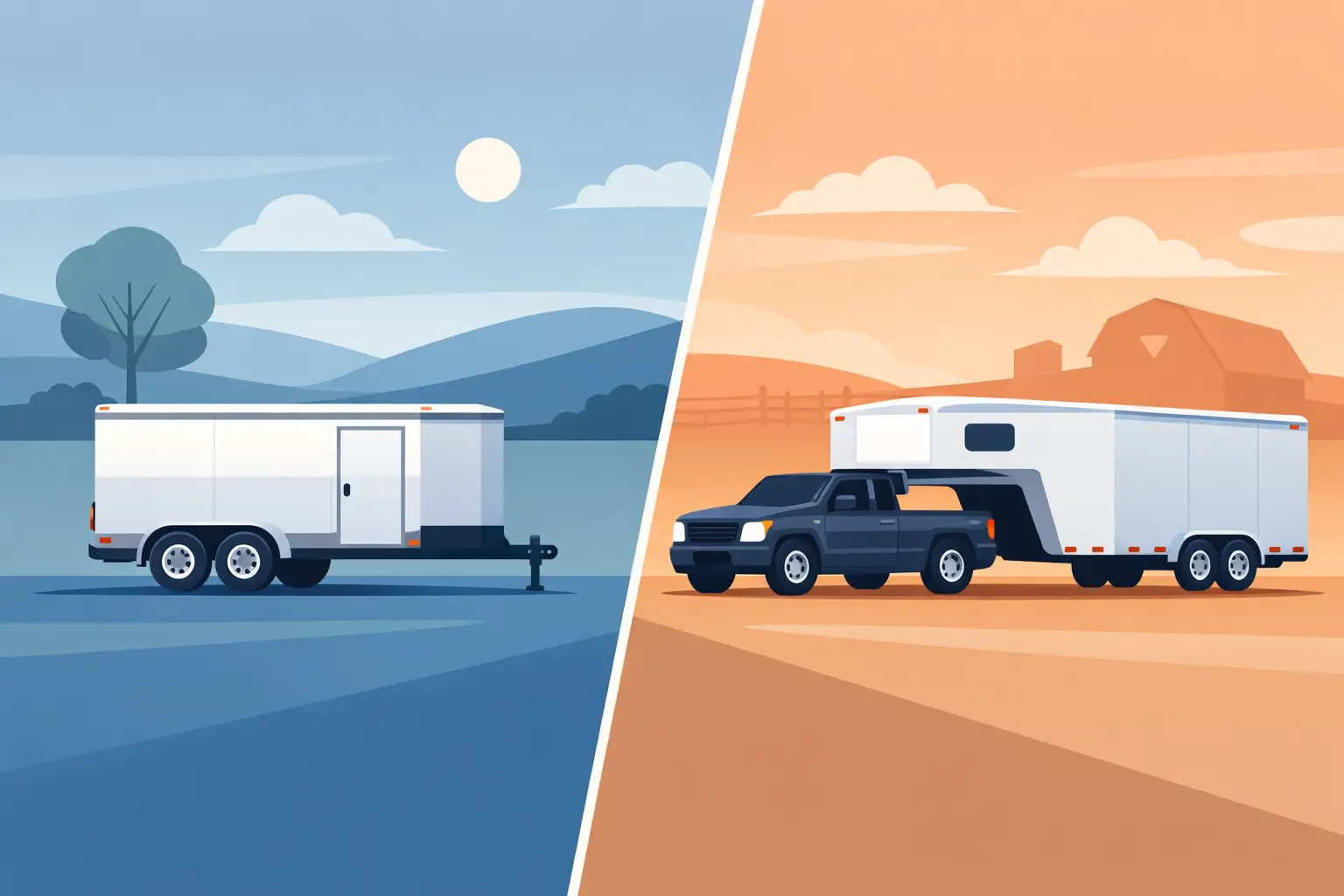
A trailer that looks right on the lot can feel completely different once it is loaded with a tractor, skid steer, round bales, or a worksite pallet. The bumper pull vs gooseneck decision comes down to more than trailer length or price. It affects how much you can safely haul, how your truck handles the load, where you can park, and how much bed space you give up.
For many truck owners, a bumper pull is the practical starting point. For regular heavy hauling, a gooseneck can be the better long-term tool. The right answer depends on your truck, the weight you pull most often, and whether the trailer is working for you every week or sitting between occasional jobs.
Bumper Pull vs Gooseneck: The Basic Difference
A bumper pull trailer connects to a receiver hitch at the rear of the truck. The coupler sits behind the bumper, putting the trailer’s tongue weight at the back of the vehicle. This is the common setup for utility trailers, smaller equipment trailers, enclosed trailers, and many recreational trailers.
A gooseneck trailer connects to a ball mounted in the truck bed, generally over or just ahead of the rear axle. Its tall neck extends over the tailgate area and drops onto the in-bed ball. By moving the connection point forward, the trailer places more of its load directly over the truck’s rear axle instead of hanging it behind the truck.
That hitch location changes nearly everything about the towing experience. A gooseneck is generally more stable with a long, heavy load. A bumper pull keeps the truck bed open and is easier to use with a wider range of vehicles.
When a Bumper Pull Makes More Sense
A bumper pull is hard to beat for versatility. If your truck carries tools, a fuel tank, a crossover toolbox, or materials in the bed, you can hook up without clearing a path to an in-bed hitch. You can also swap between trailers quickly when they use compatible couplers and receiver-mounted ball mounts.
For lighter and moderate loads, bumper pulls are straightforward to own. They typically cost less than comparable gooseneck models, and the truck does not need a bed-mounted hitch system. This makes them a strong fit for homeowners, landscapers, occasional equipment haulers, and contractors who pull smaller machines but need full use of the bed during the workday.
A bumper pull is also easier to maneuver in tight spaces at low speed. Backing still takes practice, but the trailer reacts more slowly to steering input because the pivot point is farther behind the truck. That can be helpful when parking a utility trailer beside a garage, lining up at a material yard, or working around a crowded property.
The limitation is weight and length. As trailers get longer and loads get heavier, a bumper pull can become more sensitive to crosswinds, road crown, passing trucks, and improper weight distribution. A properly matched hitch, brake controller, and weight distribution setup can improve the situation, but they do not change the basic physics of a rear-mounted connection.
Where a Gooseneck Earns Its Keep
A gooseneck is built for people who haul serious weight on a regular basis. Equipment contractors, farmers, hotshot operators, and owners moving heavier machinery often prefer the extra stability and control. The truck and trailer act more like one unit because the hitch is positioned over the rear axle area.
That placement gives a gooseneck a stronger feel on the highway, especially with a long deck or a load that has substantial weight forward of the trailer axles. It also improves resistance to sway when the trailer is loaded correctly. You still need to respect axle ratings, tire ratings, brakes, and the truck manufacturer’s tow limits, but a properly matched gooseneck setup is the better platform for repeated heavy-duty towing.
Gooseneck trailers can also offer useful deck space. The neck area may provide room for storage, a toolbox, or equipment that would otherwise occupy the main deck. For work crews, that can keep chains, binders, ramps, and smaller supplies organized without taking up valuable loading space.
The trade-off is obvious the first time you need the truck bed. A gooseneck hitch takes up room, and the neck must clear bed rails, toolboxes, and other accessories during turns. Short-bed trucks can work with some trailer and hitch combinations, but clearance needs to be checked carefully. A damaged cab corner, crushed bed rail, or pinched wiring harness is an expensive lesson in fitment.
Capacity Is More Than the Trailer’s Rating
Do not choose a trailer based only on the trailer’s advertised gross vehicle weight rating. The truck has to carry and control its share of the load. That means checking the truck’s payload capacity, rear axle rating, tire load rating, receiver rating if applicable, and manufacturer tow rating.
Tongue weight on a bumper pull often falls around 10% to 15% of the loaded trailer weight. A gooseneck commonly places roughly 15% to 25% on the truck. The gooseneck may tow more steadily, but that additional bed weight can overwhelm a truck’s payload rating faster than owners expect.
For example, a 14,000-pound loaded trailer may place 1,400 to 2,100 pounds on a bumper pull hitch, depending on balance. A gooseneck carrying the same total weight may place 2,100 to 3,500 pounds in the bed. That is why a heavy-duty truck is not automatically ready for every gooseneck just because it has a diesel engine or a factory tow package.
Load placement matters just as much. Put too little weight on the hitch and the trailer can sway. Put too much forward and you can overload the rear axle, reduce front-end steering authority, and stress tires and suspension components. Load equipment with its center of mass where the trailer manufacturer recommends, secure it with properly rated tie-downs, and verify the actual weight at a scale when the setup is new.
Truck Fitment and Hitch Setup Matter
A bumper pull setup starts with the right receiver, ball mount, ball size, safety chains, electrical connector, and brake controller. If you are near the upper end of a trailer’s capacity, a weight distribution hitch may be appropriate, provided both the truck and trailer manufacturer allow it. The hitch system must be rated for the job, not merely capable of coupling the trailer.
A gooseneck needs an in-bed hitch rated for the trailer’s loaded weight and pin weight. Installation quality matters. Mounting hardware, bed structure, safety-chain anchors, wiring placement, and ball height all affect durability and day-to-day use. If your truck has an aftermarket flatbed, custom fabrication or a specialized hitch arrangement may be needed to maintain proper clearances and a level towing stance.
Trailer height is often overlooked. A trailer that sits nose-high can shift too much weight rearward and reduce stability. One that sits nose-low can overload the front axle and create clearance problems. Before buying, measure the truck’s hitch height under normal operating conditions and compare it with the trailer’s coupler or neck height.
Cost, Convenience, and Daily Use
A bumper pull usually wins on initial cost and convenience. The trailer is often less expensive, the hitch equipment is simpler, and your truck bed remains available for normal work. It is a sensible choice when towing is one task among many.
A gooseneck costs more up front and asks more of the truck, but it can pay off when hauling is central to the business. Better stability, higher practical capacity, and work-oriented trailer designs can reduce stress on long highway runs and make frequent equipment moves more efficient.
Think about your real workload, not the one big load you might pull once a year. If you haul a compact tractor twice a month, a properly equipped bumper pull may be exactly right. If you routinely move skid steers, excavators, loaded material pallets, or multiple pieces of equipment across Virginia, North Carolina, West Virginia, or Maryland, a gooseneck and properly matched truck can be a safer, more productive investment.
Choose the Trailer That Matches the Job
The best trailer is the one that stays within your truck’s ratings, carries your normal load with room to spare, and fits the way you work. Do not buy a gooseneck only because it looks more capable, and do not settle for a bumper pull if your loads regularly push its comfort zone.
Measure the truck, know the weights, and be honest about how often you haul. When the hitch, trailer, truck, and load all match, towing becomes less of a gamble and more of a dependable part of the job.