Best Seller


Custom Steel Flatbed for Work Truck Use
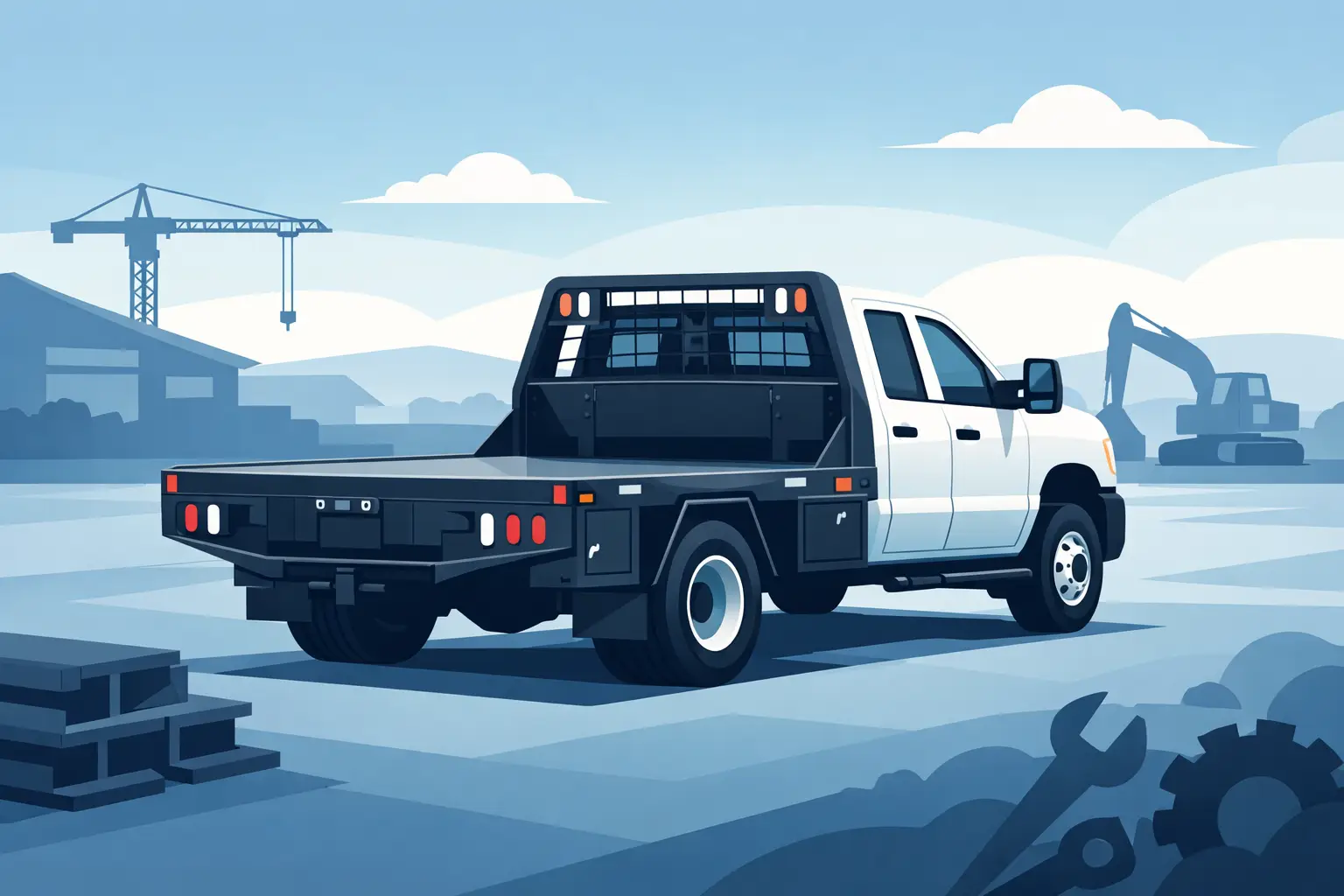
A truck that spends its day hauling tools, towing equipment, or loading awkward material will expose every weak point in a factory bed. That is where a custom steel flatbed for work truck use starts to make sense. When the truck is part of how you make money, the bed needs to match the work, not force the work to fit the bed.
Why a custom steel flatbed for work truck jobs makes sense
A standard pickup bed works fine until it does not. Once you need side access for pallets, room for a gooseneck hitch, integrated tool storage, or a deck that can handle repeated abuse from equipment and material, stock starts feeling like a compromise.
A custom steel flatbed gives you a platform built around the truck’s actual job. That might mean headache racks for hauling pipe, underbody boxes for keeping tools dry and locked up, receiver hitches for towing, or stake pockets for securing odd loads. The advantage is not just strength. It is usefulness.
For many owners, steel is the right call because it is built for punishment. It handles jobsite impact better than lighter materials, and when it does get damaged, it is often easier to repair. That matters if your truck works around forklifts, skid steers, scrap, or heavy equipment every week.
What separates custom from generic
Not every flatbed is truly custom. Some are off-the-shelf beds with a few bolt-on options. That can work for certain buyers, especially if the truck sees lighter duty use or the budget is tight. But if the truck has to support a specific workflow, a real custom build usually pays off.
The difference comes down to fit, layout, and long-term function. A custom build takes into account the truck’s chassis, axle ratings, wheelbase, cab configuration, intended payload, towing setup, and storage needs. It also considers how the truck gets used every day. There is a big difference between a truck hauling hay on a farm, one carrying welders and compressors, and one serving as a mobile repair rig.
That is why details matter. Deck length, rub rails, tie-down locations, fuel filler access, mud flap mounts, lighting, and box placement all affect how useful the truck will be once it is back on the road.
The biggest advantages of a custom steel flatbed
The first advantage is access. A flatbed gives you open sides, which makes loading with a forklift or by hand much easier than working around factory bed walls. Long material, pallets, and oversized equipment are simpler to position and secure.
The second is storage. A well-designed steel flatbed can include underbody toolboxes, top boxes, chain trays, and specialized compartments for straps, binders, weld leads, or recovery gear. Instead of tossing equipment into the cab or hoping a crossover box holds everything, you get organized storage that supports the job.
The third is towing compatibility. Many work trucks need to pull trailers, and a custom bed can be designed around receiver hitches, pintle setups, or gooseneck and fifth-wheel access. If towing is part of the truck’s daily role, it makes sense to build the bed around that requirement from the start.
Then there is durability. Steel flatbeds are made for hard use. They hold up well under repeated loading, equipment contact, and weather exposure when finished properly. They are not maintenance-free, but they are built for the kind of use that ruins lighter-duty setups.
Choosing the right deck and storage layout
This is where buyers either get a truck that works better or end up with a bed that looks good and wastes space. The right layout depends on what you carry, how often you access your tools, and whether the truck needs to stay flexible for different jobs.
If the truck mainly hauls material, a cleaner deck with fewer obstructions may be the better choice. If it operates as a service truck, storage becomes a much bigger priority. Toolboxes should be placed where they are easy to reach without interfering with loading area, trailer hookup access, or rear visibility.
Deck surface also matters. Smooth steel can work for some applications, but tread plate or other traction-minded surfaces can improve footing and durability in real work conditions. Tie-down points should match the load types you actually haul, not just what looks standard on paper.
A headache rack is another detail worth getting right. For some trucks, it is basic protection behind the cab. For others, it can double as ladder storage, mounting space, or additional tie-down support. The right design depends on whether the truck carries pipe, lumber, equipment, or enclosed cargo.
Custom steel flatbed for work truck buyers: what to think about first
Before you order a bed, start with three questions. What does the truck carry most often, what does it tow, and what wastes the most time in your current setup?
That last question matters more than people think. Maybe you are tired of climbing into the bed for straps. Maybe side loading is a constant problem. Maybe your tools take up cargo space, or your trailer hookup sits in the wrong place. A custom build should solve those problems, not just replace one bed with another.
Weight is another factor that deserves an honest look. Steel is strong, but it is heavier than aluminum. For many work truck applications, that trade-off is worth it because of the durability and repairability. Still, the bed has to match the truck’s payload and towing demands. Overbuilding can create its own problems if it cuts too deeply into usable capacity.
Finish quality also matters. A steel bed only performs long term if it is properly prepped and coated. Powder coating and other protective finishes can help with corrosion resistance, but how the bed is built and maintained matters just as much. If your truck runs through mud, salt, gravel, and weather year-round, ask hard questions about finish and upkeep.
Fitment is not a minor detail
A flatbed should fit the truck the way it was meant to be there. That includes frame mounting, lighting integration, fuel fill access, mud flaps, and clearance around tires and suspension travel. Poor fitment creates problems that show up fast, from wiring issues to awkward storage access to rubbing and alignment headaches.
That is one reason buyers often prefer working with a fabrication shop that understands both truck equipment and real-world use. Good fitment is not just about measurements. It is about knowing how the truck moves, how it is loaded, and what the owner expects it to do every day.
If your setup includes specific accessories like air springs, trailer brake controls, backup cameras, auxiliary lighting, or specialized towing hardware, those should be considered before the bed is built, not after. Planning for them early saves time and money.
When custom steel is the better investment
A custom bed usually costs more up front than a generic solution. That is the truth. But for many owners, the return shows up in less downtime, better organization, safer hauling, and fewer workarounds.
If the truck is central to your business, that matters. Time spent fighting bad storage, weak tie-down placement, or poor trailer access costs money. A bed that supports faster loading, better tool organization, and easier towing can earn its keep over time.
It also helps resale in the right market. A well-built flatbed with practical storage and clean fitment is attractive to serious buyers. Not every custom setup will appeal to everyone, but quality fabrication tends to hold value better than cheap, generic equipment that looks tired after a few hard seasons.
For buyers who want a bed that matches the truck instead of forcing compromises, working with a shop that builds around real use is the smart move. HCR Custom Fabrication serves that kind of customer – truck owners who need equipment that fits, holds up, and works as hard as the truck itself.
The right bed should make the truck easier to use
The best custom steel flatbed is not the one with the most options. It is the one that makes the truck more useful every day. That might mean open deck space, secure tool storage, stronger tie-downs, cleaner trailer access, or a build that stands up to the kind of abuse your work demands.
There is no single perfect setup for every truck. A contractor, farmer, towing operator, and mobile mechanic will all need something different. That is exactly why custom matters.
If your current bed is slowing you down, wasting space, or not built for the loads you handle, that is your answer. Build the truck around the job, and the work gets easier from there.