Best Seller


Custom Metal Fabrication for Trucks That Works
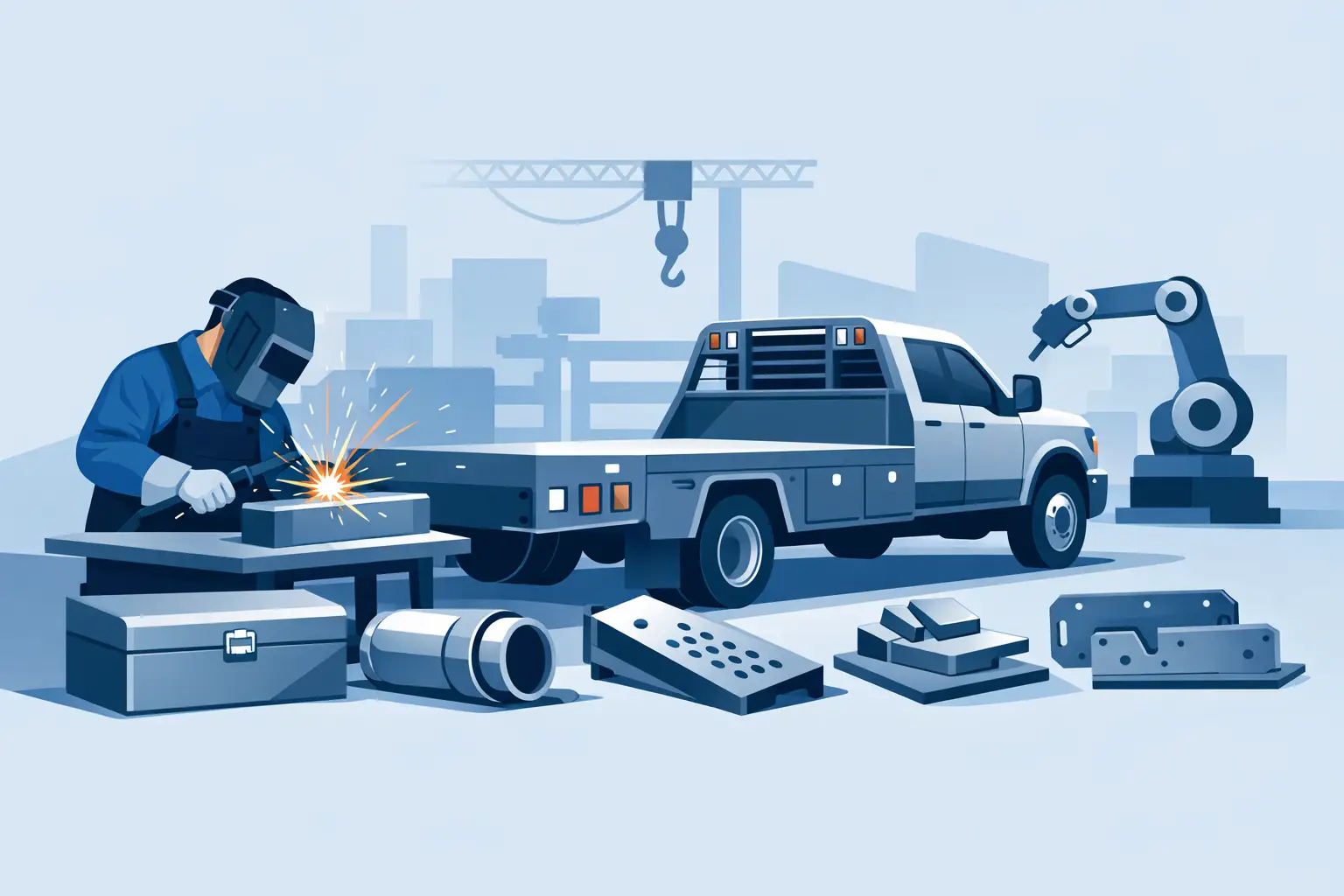
A truck that earns its keep exposes weak equipment fast. A bed that flexes under a load, a bumper that blocks trailer access, or poorly placed storage can cost time on every job. Custom metal fabrication for trucks solves those problems by building around the truck, the equipment, and the work instead of forcing a one-size-fits-all part to do a job it was never designed for.
For contractors, farm operators, fleet managers, and hands-on truck owners, custom work is not about adding flash. It is about getting a stronger, cleaner, more useful setup that holds up on the road and at the jobsite.
What Custom Fabrication Can Do for a Work Truck
Custom fabrication begins with a practical question: What does this truck need to carry, pull, protect, or support? The answer may be a steel flatbed with integrated stake pockets, a headache rack built for material handling, equipment mounts, underbody storage, receiver hitches, or replacement brackets that are no longer available off the shelf.
The biggest advantage is fit. A fabricated component can account for cab clearance, wheelbase, frame layout, fuel fill location, lighting, suspension travel, and existing accessories. That matters when a generic bed or bolt-on accessory creates interference, leaves wasted space, or requires compromises that make daily use harder.
A well-planned build can also improve how the truck works as a complete system. For example, a flatbed may need recessed lighting, a gooseneck hitch, rub rails, tie-down points, and a clear path to toolbox doors. Those details should be designed together, not added one at a time after the fact.
Start With the Job, Not the Parts List
The right build depends on how the truck is used most days, not the biggest load it might carry once a year. A landscaping crew, a hotshot operator, and a homeowner hauling a compact tractor can all need a flatbed, but their priorities are different.
Before requesting a quote, think through the real working conditions. Consider the cargo weight and dimensions, how often the truck tows, where straps and chains need to land, and whether the vehicle enters muddy fields, tight job sites, or parking garages. Also consider who operates the truck. A feature that saves one driver five minutes per stop can add up quickly across a fleet.
Load Capacity Is More Than Steel Thickness
Heavier steel can add strength, but it also adds weight. That extra weight reduces available payload and may affect ride quality, braking, and fuel use. The goal is not simply to build the heaviest bed possible. It is to use the right material thickness, crossmember spacing, bracing, and mounting method for the expected load.
A fabricator should account for the truck’s gross vehicle weight rating and axle ratings. A strong bed does not give a truck permission to exceed its legal or mechanical limits. If the work requires carrying exceptionally heavy equipment, it may be better to step up to a different truck class than overload a light-duty platform.
Access Matters After the First Week
It is easy to focus on the finished look and overlook daily access. Can you reach the trailer plug without climbing over a rail? Can you open storage compartments with a trailer attached? Is the fuel fill accessible? Are the tie-down points positioned where loads actually need to be secured?
These are the details that separate a good-looking build from a useful one. Custom metal work should reduce aggravation, not create it.
Steel Flatbeds: Built Around Real Loads
Steel flatbeds remain one of the most practical forms of custom metal fabrication for trucks. They offer a durable work surface, straightforward repairability, and the flexibility to carry lumber, equipment, pallets, hay, tools, and trailers.
A basic flatbed may be the right answer for a truck that only needs open deck space. A more specialized build can include a headache rack, removable sideboards, expanded-metal sections, underbody boxes, integrated ramps, stake pockets, winch mounts, and a gooseneck or fifth-wheel hitch. There is no universal best configuration.
Deck material is another decision worth making carefully. Wood offers replaceable traction and a traditional work-truck look. Steel tread plate is durable and easy to clean, but can become slick when wet depending on the finish. Steel planks or open structural members may suit certain equipment-hauling applications. Each choice changes cost, weight, maintenance, and traction.
Finish also matters. A properly prepared and coated steel bed is better positioned to handle road salt, rain, mud, and daily abrasion. No finish is maintenance-free, especially in areas with winter-treated roads. Regular washing, inspection, and prompt touch-up of chips help protect the investment.
Fabricated Upgrades That Earn Their Space
Not every truck needs a complete bed replacement. Often, a targeted fabricated upgrade provides the biggest improvement for the money. A custom receiver mount may improve towing access. A heavy-duty bumper can offer better protection and recovery points. Equipment brackets can keep tools from shifting in the cab or bed.
Storage is especially valuable when it is designed for the equipment you actually carry. Underbody boxes, lockable side compartments, and purpose-built racks keep gear organized while preserving deck space. But added storage needs to be placed carefully so it does not reduce ground clearance, interfere with tires, or make the truck wider than necessary.
For older trucks, custom fabrication can also solve an availability problem. Rusted brackets, discontinued supports, and damaged body mounts are not always available as replacement parts. Reproducing or improving a component may keep a capable truck in service and avoid a patchwork repair.
Fitment and Installation Are Where Quality Shows
Good fabrication is not just about clean welds. It is also about accurate measurements, appropriate material selection, protected wiring, safe routing for brake and fuel components, and mounting that works with the truck’s frame. A part that looks square on the shop floor can still cause trouble if it does not account for factory tolerances and vehicle-specific systems.
Lighting deserves special attention. Work lights, marker lights, reverse lights, and trailer connections need secure mounting, protected wiring, and placement that supports visibility without creating unnecessary glare. If a fabricated bed changes factory lighting locations, the final setup should remain road-ready and easy to service.
The same applies to towing components. A hitch, safety-chain mount, or gooseneck connection must be built and installed for the intended load, not guessed at. Towing failures are expensive and dangerous, which is why purpose-built equipment and proper installation are worth more than a shortcut.
Choosing Between Custom and Off-the-Shelf Equipment
Off-the-shelf truck equipment has a place. It can be less expensive, available faster, and perfectly suitable when the application is common. If a standard headache rack or toolbox fits your truck and does exactly what you need, customization may not add enough value.
Custom work makes more sense when standard equipment creates a fitment issue, when the truck has a specialized job, or when multiple functions need to work together. It is also the better route when durability, access, and load handling matter more than the lowest upfront price.
The trade-off is lead time and planning. Custom fabrication requires measurements, design decisions, material sourcing, and shop time. The best way to avoid delays is to be clear about the truck’s year, make, model, bed length, wheelbase, and intended use from the start. Photos of the current setup and a straightforward list of must-have features can prevent costly revisions later.
Questions to Ask Before Approving a Build
A useful conversation with a fabrication shop should cover the material being used, the expected load, how the equipment mounts to the truck, and what finish will protect it. Ask how lights, wiring, trailer connections, and service access will be handled. If the build includes towing equipment, confirm the intended rating and whether it matches the truck and trailer setup.
It also helps to ask what maintenance the finished equipment will need. Steel work is built for hard use, but it still benefits from periodic inspection. Check for loose hardware, coating damage, cracked weld areas, worn tie-downs, and wiring abrasion before small issues become downtime.
For truck owners across Virginia, North Carolina, West Virginia, and Maryland, road salt, uneven terrain, and long work miles make that attention worthwhile. Equipment that is built right and maintained well stays useful longer.
HCR Custom Fabrication approaches truck builds with the same goal serious owners bring to the shop: make the vehicle work harder without making it harder to own. Bring a clear picture of the job your truck needs to do, and build the equipment around that reality.