Best Seller


Steel Flatbed vs Aluminum for Work Trucks
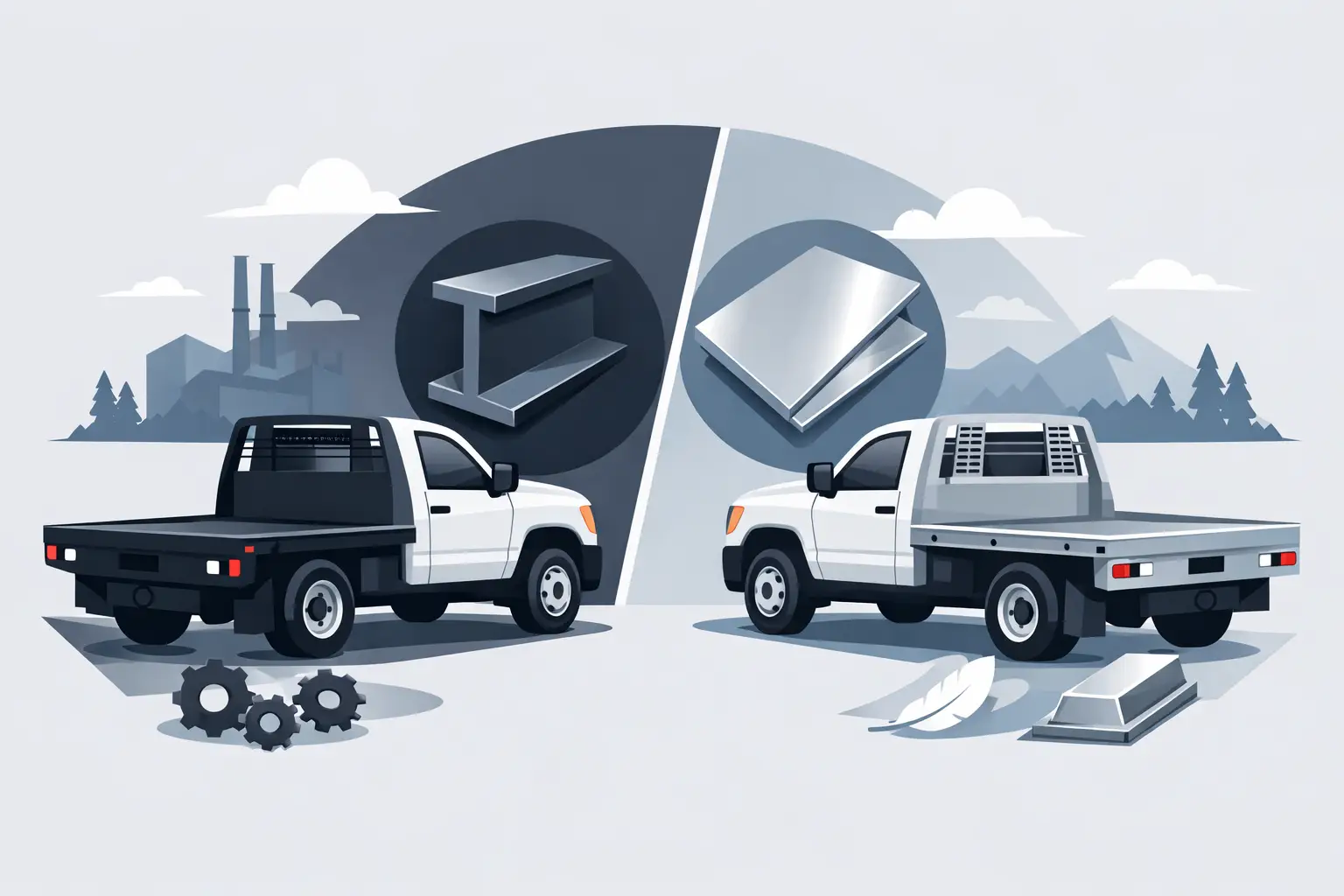
A steel flatbed vs aluminum decision is not just about what looks good behind the cab. Your bed carries tools, material, equipment, and the daily abuse that keeps a job moving. The right choice depends on what you haul, where you work, how long you plan to keep the truck, and whether a few hundred pounds of bed weight matters more than damage resistance.
For many work truck owners, steel is the practical answer because it takes hard use, handles custom fabrication well, and can be repaired without turning a small impact into a major replacement job. Aluminum has a real place too, especially when payload and corrosion resistance are top priorities. Here is how to make the call with your truck and workload in mind.
Steel Flatbed vs Aluminum: Start With the Job
The best flatbed material is the one that fits the work, not the one with the best sales pitch. A contractor hauling lumber, ladders, job boxes, and a skid steer attachment has different needs than a hotshot operator trying to maximize legal payload. A farm truck that sees mud, fence posts, feed, and rough fields has different demands than a service truck that stays on paved roads.
Steel flatbeds are built for owners who expect the bed to be used hard. Steel handles concentrated loads well, which matters when you are loading pallets, equipment, pipe, or materials that do not land gently. It is also a natural fit for custom add-ons such as headache racks, underbody boxes, stake pockets, receiver hitches, ramps, and specialized tie-down points.
Aluminum flatbeds are primarily chosen for weight savings. A lighter bed can free up payload capacity and may help a truck operate more efficiently over long distances. That advantage is meaningful when every pound affects what you can legally carry. But less bed weight does not automatically mean a better bed for every operation.
Strength and Daily Durability
Steel earns its reputation on demanding job sites. A properly built steel flatbed can take repeated loading, shifting cargo, dropped tools, and rough use without showing damage as quickly as aluminum. It is well suited for work trucks that operate around construction materials, machinery, livestock equipment, and other heavy gear.
Steel also gives fabricators more flexibility. If you need a bed designed around your actual work, steel can be formed, welded, reinforced, and modified with fewer limitations. That matters when an off-the-shelf layout leaves you without the storage, deck length, rail system, or mounting points you need.
Aluminum is strong for its weight, but it generally needs more material or different structural design to achieve comparable stiffness in high-stress areas. A quality aluminum flatbed is not flimsy. Still, it can be more prone to dents, gouges, and distortion from sharp or concentrated impacts. If your crew regularly tosses chain, steel, concrete forms, or machinery parts onto the deck, that difference becomes visible over time.
Where Steel Makes the Most Sense
Steel is usually the better fit for construction, agricultural work, welding rigs, utility applications, and trucks that work off-road or carry heavy equipment. It also suits owners who need a custom bed built around tools and workflow rather than a standard catalog configuration.
If the truck will see abuse, steel lets you focus on getting the work done instead of worrying about every hard load or scrape.
Payload and Weight Savings
Aluminum’s biggest advantage is simple: it weighs less. Depending on bed size, configuration, accessories, and build method, an aluminum flatbed can save several hundred pounds compared with a similar steel setup. That can be useful for operators who haul freight, pull trailers, or work near a truck’s weight limits.
More available payload can mean more material on the truck, fewer trips, or more room for tools and cargo without exceeding ratings. For long-distance operators, reduced weight may also provide a modest efficiency benefit. Those gains depend on the truck, route, load, trailer use, and driving conditions, so they should not be treated as guaranteed.
Before choosing aluminum strictly for payload, look at the full truck setup. A heavier-duty steel bed may include integrated storage, a stronger rack, better tie-down options, or equipment mounts that eliminate separate accessories. Compare the finished truck, not just bare bed weights.
For many local work trucks, the payload difference is less valuable than durability and ease of repair. For a truck that earns money by carrying as much as possible, aluminum may justify its higher upfront cost.
Corrosion Resistance Matters, But So Does Coating
Aluminum does not rust like steel, which is a major advantage for trucks exposed to rain, road salt, fertilizer, coastal air, or year-round outdoor storage. It can oxidize and stain, but it will not develop the red rust that can spread beneath damaged paint on a steel bed.
That does not mean aluminum is maintenance-free. It can still corrode under certain conditions, especially where dissimilar metals, moisture, and road chemicals are involved. Fasteners, brackets, and mounting points need to be selected and maintained correctly to reduce galvanic corrosion.
Steel requires more attention to finish quality. A well-built steel flatbed with proper surface prep, quality primer, and a durable paint or powder-coated finish can hold up for years. The key is touching up chips and scratches before moisture gets underneath the coating. Inspect the underside, crossmembers, weld areas, stake pockets, and places where equipment rubs against the bed.
For truck owners in Virginia, North Carolina, West Virginia, and Maryland, road salt and wet winters are a real consideration. If you choose steel, regular washing and quick paint touch-ups go a long way toward protecting the investment.
Repairability Can Save a Workday
A flatbed is going to get scratched, dented, or damaged eventually. What happens after that matters.
Steel is usually easier and more economical to repair. A qualified shop can weld cracks, straighten damaged sections, replace a rail, patch a deck area, or add reinforcement where the work demands it. Those repairs are familiar to most fabrication shops, and they often keep a truck from sitting idle for long.
Aluminum repairs require the right equipment, clean material preparation, and experienced welding. The repair process can cost more, and not every shop handles aluminum structural work. In some cases, replacing a damaged component makes more sense than repairing it.
That does not make aluminum a poor choice. It means downtime should be part of the buying decision. If your truck cannot afford to be off the road and it operates in a high-impact environment, steel offers a practical advantage.
Upfront Cost vs Long-Term Value
Aluminum flatbeds often cost more upfront because aluminum material and fabrication processes are more expensive. The price difference can be worth it for operators who need lower weight, operate in corrosive conditions, or plan to recover value at resale.
Steel commonly offers a better starting value, particularly for custom builds. It allows you to put more of the budget toward useful features such as tool storage, winch mounts, lighting, ramps, gooseneck access, and secure tie-downs. A bed that helps your crew work faster can be worth more than a lighter bed with fewer job-specific features.
Long-term value comes down to ownership habits. An aluminum bed may hold up well against weather with little finish maintenance. A steel bed can provide years of dependable service when it is coated properly and maintained. The cheaper option is not always the lower-priced one. A bed that does not fit the job can cost more through damage, modifications, lost payload, or missed work.
Fit, Layout, and Custom Fabrication
Material is only one part of a flatbed purchase. Deck length, wheel fitment, frame mounting, lighting, fuel-filler placement, hitch access, rack design, and storage layout all affect how well the truck works.
A custom steel flatbed gives you room to build for the equipment you carry every day. That could mean a full-width headache rack for ladders and pipe, recessed tie-downs for equipment, lockable boxes for tools, or a cleaner layout for towing. The goal is not to add every possible feature. It is to add the features that remove wasted time from your day.
Make sure the bed is matched to your truck’s chassis, intended payload, and towing requirements. Check that lights, trailer connections, cameras, sensors, and fuel access are handled correctly. A good-looking bed is not enough if it creates fitment problems or limits how you use the truck.
Choose the Bed You Will Use Hard
Choose aluminum when low weight, available payload, and corrosion resistance are the priorities. Choose steel when your truck faces heavy use, rough loads, regular modifications, and the occasional hard hit that comes with real work.
Before ordering, write down the heaviest loads you carry, the equipment that must stay on the truck, and the conditions your bed sees every week. Bring that list to HCR Custom Fabrication or another qualified truck equipment shop. A bed built around the way you work will keep paying for itself long after the first load is hauled.