Best Seller


Steel Flatbed Toolbox Options That Work
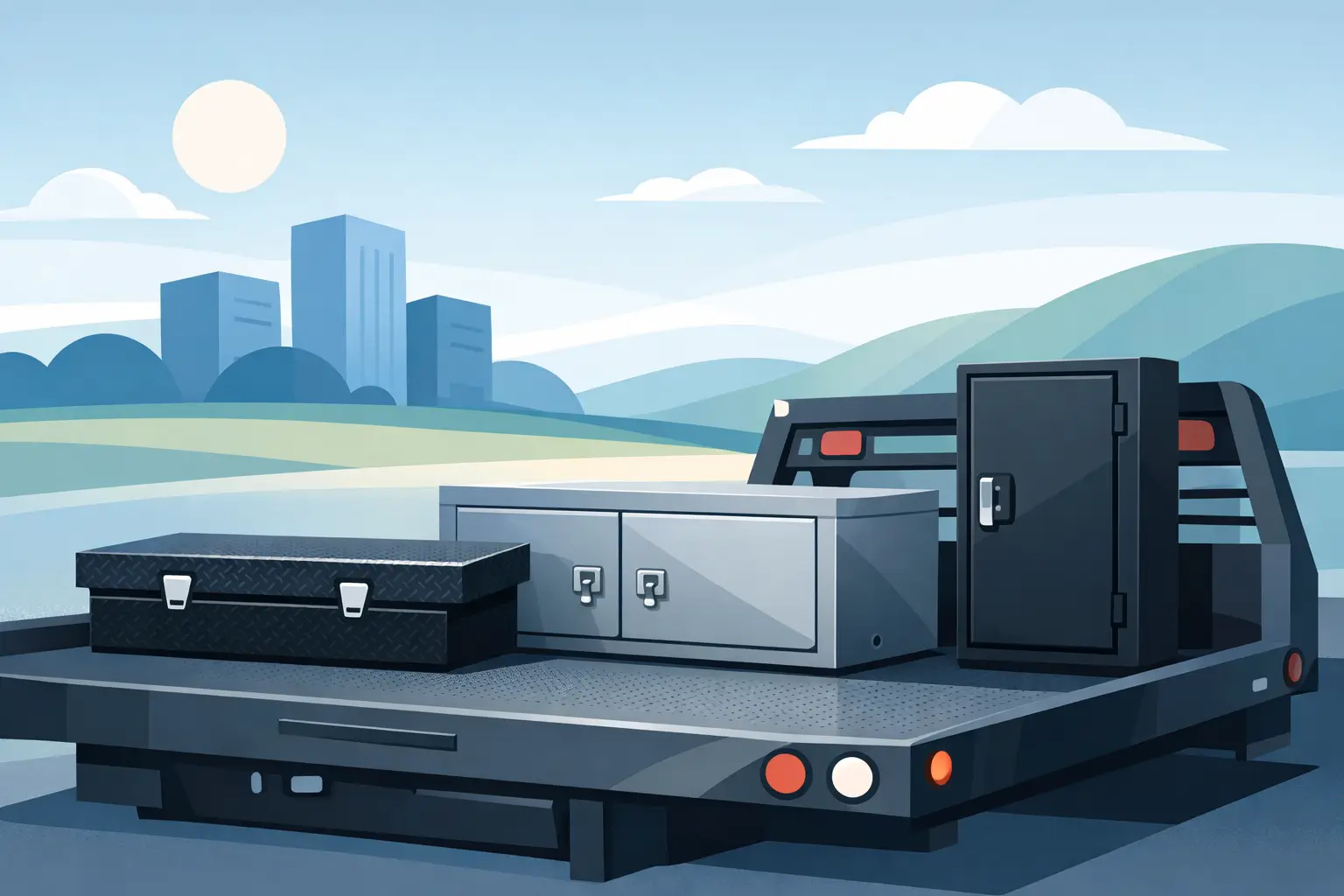
A flatbed truck without secure storage usually turns into a rolling junk pile by the end of the week. Chains end up under tarps, straps get wet, hand tools disappear, and the one part you need is buried under everything else. That is why steel flatbed toolbox options matter – not as an add-on, but as part of how the truck works every day.
The right box setup depends on what the truck does, how often it loads from the side, and what you need to protect from weather, theft, and jobsite abuse. Some owners need clean side access for daily tools. Others need a place for binders, chains, and hydraulic gear that stays out of the bed completely. There is no single best answer. There is a best fit for your truck, your load style, and your work.
Common steel flatbed toolbox options for work trucks
Most flatbed storage layouts fall into a few proven categories. The difference is where the box mounts, how much it holds, and how it affects bed access.
Underbody toolboxes
Underbody boxes mount beneath the bed, usually along the sides or behind the cab depending on frame space and body design. For many work trucks, this is the most efficient use of room because it keeps the deck clear for cargo while still giving you secure storage.
This style works well for chains, binders, recovery gear, hand tools, and smaller power tools. It also keeps weight lower on the truck, which can help stability compared to stacking heavy gear up high. The trade-off is ground clearance and exposure. If the truck sees rough terrain, mud, snow, or jobsite debris, underbody placement needs to be chosen carefully.
Side-mount flatbed boxes
Side-mount boxes are built into the bed rails or mounted just outside the deck line. They give fast access from either side and are popular for service trucks, ranch trucks, and contractor rigs where tools need to be reached all day.
They can be a strong choice when organization matters more than maximum deck width. The downside is that some side boxes can interfere with oversized loads or reduce easy access to palletized material. If the truck regularly carries wide equipment, pipe, lumber, or hay, box width and lid swing need extra attention.
Headache rack toolboxes
A headache rack with integrated storage puts tools at the front of the bed behind the cab. This setup is useful when you want weather protection, lockable storage, and a cleaner side profile. It also keeps gear away from rear loading zones.
This option often makes sense for truck owners who carry longer material and still want a front storage wall. It can be especially useful for tie-down gear, smaller equipment, and items you do not need every ten minutes. The trade-off is reach. On taller trucks, grabbing gear from a front box can be less convenient than side access.
Top-deck or crossover-style boxes for flatbeds
Some flatbeds use a front-mounted deck box that works like a crossover box adapted to a flatbed layout. These sit on the deck at the front and offer larger enclosed storage without taking up the entire bed.
They are useful when volume matters and bed length allows it. If you already run a longer bed and rarely load full-length material tight against the headache rack, a front deck box can earn its keep fast. On shorter beds, though, every inch matters, and that lost deck space may not be worth it.
What to look for when comparing steel flatbed toolbox options
Not all steel boxes are built for the same level of work. Material, lid construction, seals, and mounting all affect how the box holds up after the first season.
Gauge matters, but design matters too. A thicker steel box with weak hinges or poor drainage can still become a problem. Look at reinforced doors, solid latch systems, smooth weld quality, and weather sealing that actually keeps dust and water out. If the truck works year-round, corrosion resistance should be part of the conversation, especially where road salt is common.
Security is another major factor. A toolbox is only as useful as its lock system when the truck is parked overnight or left on a site. Better latch protection, tighter lid fit, and stronger hinge construction help slow down theft and reduce prying damage. If expensive tools live in the truck, that upgrade usually pays for itself.
Then there is access. A box that technically fits but blocks fuel fill access, interferes with stake pockets, or opens into another component can become a daily headache. Good storage should speed up work, not add one more thing to fight with.
Matching the box style to how the truck is used
A contractor hauling compressors, saws, and jobsite hardware needs a different setup than a hotshot operator carrying straps and binders. The same goes for a farm truck versus a rollback support truck.
If the truck spends its life hauling material, keeping the bed clear is usually the priority. Underbody boxes often make the most sense there. If the truck acts more like a mobile shop, side boxes and front storage become more valuable because fast access beats raw deck space.
Fleet owners usually care about repeatability. They want the same storage layout across multiple trucks so drivers know where everything goes and replacement parts are simpler to manage. In that case, standard box sizing and dependable mounting matter just as much as capacity.
Owner-operators tend to think more personally about workflow. Maybe one truck carries welding leads, grinders, and fabrication tools. Another may need room for tow straps, jacks, and emergency gear. That is where custom planning starts making more sense than trying to force a universal setup.
Standard versus custom steel toolbox setups
Off-the-shelf boxes work fine for many trucks, especially when the flatbed follows common dimensions and the storage need is straightforward. They can be quicker to source and easier to replace later. If you know exactly what size you need and the mounting area is clean and accessible, standard boxes can be the practical choice.
Custom setups make more sense when the truck has unusual frame spacing, added equipment, fuel tanks, liftgates, compressed air systems, or a specific workflow that standard boxes do not support. A custom layout can also help maximize every inch on a work truck where storage and deck function both matter.
That is often where a fabrication-minded shop earns its value. Instead of just asking what box you want, the better question is how the truck is used. Once that is clear, box size, placement, door style, and mounting can be built around real work instead of guesswork. HCR Custom Fabrication works in that lane, where fit and function matter more than forcing a generic setup onto a serious truck.
Steel versus other toolbox materials
For flatbed work, steel remains a top choice because it takes abuse, supports heavier-duty use, and generally offers better security than lighter materials. It is a solid fit for contractors, equipment haulers, farms, and commercial trucks that do not live easy lives.
The trade-off is weight. Steel boxes add more weight than aluminum, and on some trucks payload matters enough that this needs a close look. Steel also needs proper finish protection to hold up against moisture, salt, and chips. If the truck sees constant exposure and every pound counts, lighter materials may be worth considering. But for pure toughness and a work-first setup, steel is still hard to beat.
Installation details that make or break the setup
A good box in the wrong location is still the wrong setup. Mounting points need to support the box under load, not just hold it in place when empty. Clearance around suspension travel, tires, lighting, and exhaust also needs to be checked before anything gets locked in.
Door swing is another detail that gets missed. A box lid may clear the truck in the shop but become awkward with a trailer hooked up or when parked next to equipment. Drainage, wiring clearance, and access to tie-down points should all be considered early.
This is why truck owners should think beyond dimensions on paper. Real-world fitment matters. If you use your truck hard, the best toolbox setup is the one that still works when the bed is loaded, the site is muddy, and you are reaching for gear in the dark.
Buying with the long view in mind
Cheap storage usually gets expensive later. Bent lids, failed latches, rusted bottoms, and poor mounting hardware cost time long before they cost replacement money. A better box setup protects tools, cuts wasted motion, and keeps the truck cleaner and more organized through the workweek.
When comparing steel flatbed toolbox options, start with use case first, then size, then mounting, then finish and hardware. That order helps avoid buying a box that looks good in a listing but does not work on the truck.
The right setup should feel like part of the bed, not an accessory you tolerate. If your truck earns its keep every day, storage should do the same.