Best Seller


Best Work Truck Toolboxes for Hard Daily Use
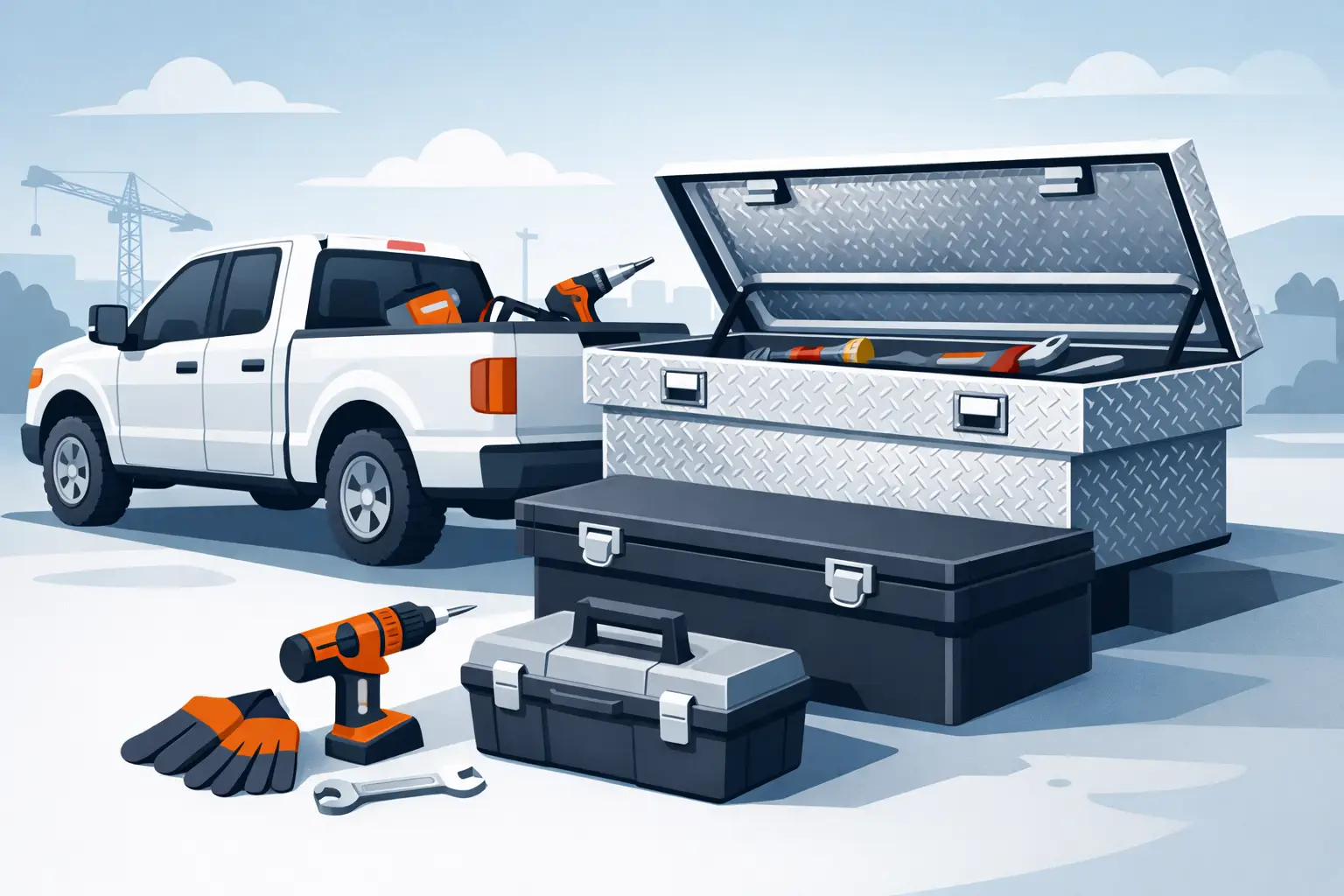
A toolbox that rattles, leaks, or steals too much bed space turns a useful truck into a daily frustration. The best work truck toolboxes protect the gear you paid for, keep it within reach, and fit the way your crew actually loads and works. That sounds simple, but the right choice depends on your truck bed, the tools you carry, how often you tow, and whether you need open cargo space at the end of the day.
For contractors, farm operators, fleet drivers, and hands-on truck owners, a toolbox is not just an accessory. It is part of the truck’s working setup. Choose it like any other piece of job equipment: based on fit, material, access, security, and the abuse it will take over time.
What Makes the Best Work Truck Toolboxes?
The best box is rarely the largest one on the shelf. It is the one that carries what you need without getting in the way of everything else. A full-size pickup hauling compressors, material, fuel cans, or towing equipment needs a different setup than a service truck loaded with hand tools and replacement parts.
Start with the bed layout. Measure the inside bed rails, the distance between wheel wells, and clearance around any tonneau cover, ladder rack, headache rack, or fifth-wheel hitch. A toolbox can be built well and still be a poor purchase if it blocks a needed accessory or makes it harder to use the bed.
Daily access matters just as much. If you grab impact tools, straps, fittings, or basic hand tools several times a day, a box should open easily from the ground and keep those items organized. If the contents are mostly emergency gear or occasional-use tools, capacity and weather protection may matter more than fast access.
Material: Aluminum, Steel, or Plastic
Aluminum crossover boxes are a common choice for good reason. They are lighter than steel, resist corrosion well, and do not eat as much into payload. For trucks that see rain, road salt, gravel roads, and regular travel across Virginia, North Carolina, West Virginia, or Maryland, aluminum offers a practical balance of weight and durability.
Steel boxes make sense when maximum impact resistance is the priority. A heavy steel box can take hard use on a construction site or in a commercial environment, but it adds significant weight and needs a quality finish to fight rust. Powder-coated steel can hold up well, provided chips and scratches are addressed before corrosion gets started.
Molded plastic toolboxes are lightweight, affordable, and naturally resistant to rust. They work best for lighter-duty use, temporary storage, or truck owners who need weather protection without carrying heavy tools. For a crew truck or a truck that regularly carries expensive power tools, plastic usually does not offer the same security or long-term rigidity as metal.
Choose a Toolbox Style That Fits the Job
Toolbox style affects how you access tools and how much of the bed remains usable. There is no universal winner. The correct layout comes down to cargo, work habits, and truck configuration.
Crossover and Saddle Boxes
A crossover box sits across the bed rails directly behind the cab. It is the familiar jobsite setup because it keeps tools at waist height, preserves most of the bed floor, and gives access from either side of the truck. It works especially well for hand tools, drill kits, tow straps, tie-downs, and everyday supplies.
The trade-off is reduced space at the front of the bed. It can also interfere with certain bed covers or rack systems. Before buying, confirm whether the lid design clears the rear window, rack uprights, and any cover rails.
Side-Mount and Rail-Mount Boxes
Side-mount boxes run along one bed rail, leaving the center open for long cargo. They are a smart option for owners hauling lumber, pipe, panels, ladders, or equipment that needs the full bed length. Many commercial users pair two side boxes with a center box or open floor space.
Their downside is reach. Deep side boxes can be difficult to access over a tall bed side, especially on lifted trucks. They also narrow the usable width of the bed. If you regularly load pallets, an ATV, or large equipment, measure carefully before committing.
Underbody and Flatbed Toolboxes
Underbody boxes mount below a flatbed or service body, using space that would otherwise go unused. They are a strong choice for custom flatbeds because they keep the deck clear while placing chains, binders, straps, and job-specific equipment close to where it is needed.
These boxes need more than a quick fit check. Confirm the mounting structure is strong, the doors clear tires and suspension travel, and the box is positioned away from exhaust heat and road hazards. On a work truck, proper mounting is just as important as the box itself. A loose box will crack mounts, damage the bed, and become a safety problem.
Wheel Well and Chest Boxes
Wheel well boxes fit over or around the wheel wells and can be useful on trucks where a crossover box is not practical. Chest boxes sit on the bed floor and offer large capacity at a lower price point. Both can work, but both give up more cargo space and usually require climbing into the bed to reach the contents.
A chest box is often better for equipment that stays in the truck, such as specialty tools, recovery gear, or seasonal supplies. It is less convenient for a technician who opens the box all day long.
Security Is More Than a Locking Lid
A lock helps, but security starts with construction. Look for thick lid material, reinforced lid channels, protected latch rods, sturdy hinge points, and a lid that closes tightly without flexing. Thin metal can be pried open quickly, particularly if the box is loaded with valuable cordless tools.
Weather seals deserve the same attention. A toolbox is not useful if rainwater reaches batteries, electrical test equipment, paperwork, or steel tools. Check that the lid seal runs continuously, the lid closes evenly, and water has a way to drain away from the opening. A box may be weather-resistant rather than completely waterproof, so do not assume expensive equipment is protected without checking seals after a hard rain or wash.
For higher-value loads, think beyond the box. Park smart, keep expensive tools out of sight when possible, and consider a truck alarm or lockable bed cover as part of the overall security plan. A toolbox is one layer of protection, not the whole plan.
Fitment Details That Prevent Bad Purchases
Truck beds are not all the same. A toolbox made for a full-size truck may not fit a compact bed, a stepside bed, a dually, or a truck with factory cargo rails. Even within the same truck model, bed length and model year can change the available space.
Measure before ordering, then compare those dimensions with the box body, lid overhang, and mounting footprint. Pay close attention to clearance with factory bed caps, spray-in liners, drop-in liners, tonneau covers, and rack systems. If you run a fifth-wheel or gooseneck hitch, keep the front bed area clear enough for turning clearance and hitch operation.
Do not rely on a universal fit label by itself. Universal can mean the mounting hardware is adaptable, not that the toolbox will work cleanly with your specific bed setup. Exact-fit confidence saves time, prevents return headaches, and protects your truck from unnecessary drilling.
Organize the Box for Faster Work
A big empty toolbox quickly becomes a pile of loose tools. That wastes time and can damage gear during travel. Use removable trays for small fittings and hardware, dividers for hand tools, and weather-resistant cases for batteries, meters, and electrical items. Heavier tools should sit low and be secured so they do not slam into the lid or latch mechanism.
Keep the gear you need most often near the opening. Recovery straps, gloves, a first-aid kit, tie-downs, and basic roadside equipment should be easy to grab without unloading half the box. Specialty tools can go deeper in the storage layout.
It also pays to manage weight. A toolbox full of steel tools, chains, and parts can add hundreds of pounds behind the cab or along the bed rails. Account for that weight when considering payload, suspension condition, and the cargo you plan to carry. On a fleet truck, standardizing tool layouts between vehicles can make drivers more efficient and simplify inventory checks.
Buy for the Truck You Work From
The right toolbox should match the work your truck performs on its busiest day, not its easiest day. A light aluminum crossover box may be the best fit for a contractor who needs quick access and open bed space. A set of underbody boxes may serve a flatbed operator better. A heavy steel box may earn its keep on a hard-used commercial truck where security matters more than weight.
If you are pairing storage with a new flatbed, service setup, or custom fabrication work, plan the whole layout before drilling the first mounting hole. HCR Custom Fabrication can help truck owners build around real cargo needs instead of forcing a generic box into a setup that does not work.
Choose a toolbox that keeps the tools dry, the load secure, and the bed useful. When the truck is set up right, you spend less time hunting for equipment and more time getting the job done.